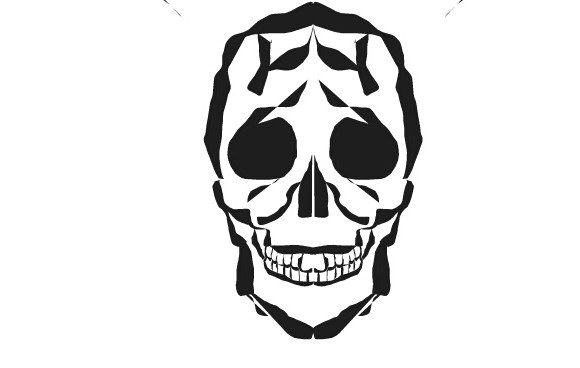
Exploring Human Skull Face Design: Techniques, Applications, and Creative Expression
The human skull face design sits at a fascinating intersection of anatomy, art, and personal expression. Whether you are a makeup artist preparing for a film production, a tattoo enthusiast planning your next piece, or someone crafting a striking look for a cultural celebration, understanding the principles behind skull-inspired facial design opens up a world of creative possibility. This article focuses on practical approaches, common challenges, and the rewarding outcomes that come from engaging with human skull face design in thoughtful and skillful ways.
What Human Skull Face Design Really Means
At its core, human skull face design involves translating the structural elements of the human cranium into a visual composition applied to a living face or represented in a two-dimensional or three-dimensional medium. This goes well beyond simply drawing white lines on a black background. It requires a working knowledge of how cheekbones protrude, how the jawline anchors the lower face, how the eye sockets create depth and shadow, and how the nasal cavity interrupts the central plane of the face. Artists, makeup professionals, and body painters all approach this design challenge with different tools and intentions, but they share a common need to understand the bony architecture that sits beneath the skin.
The term encompasses a diverse range of applications. You encounter human skull face design in sugar skull makeup for Día de los Muertos celebrations, in hyper-realistic special effects for horror films, in stylized tattoo flash art, in digital character concept work for video games, and even in avant-garde fashion editorials. Each context demands a slightly different interpretation of the skull motif, yet all benefit from a solid grasp of anatomical landmarks and shading techniques.
Why People Pursue Skull Face Design Projects
People turn to human skull face design for many reasons, and identifying your specific goal helps clarify the path forward. Some common motivations include preparing for a themed event where a convincing or artistic skull look is central to the experience. Others are professional makeup artists seeking to expand their portfolio with high-impact, technically demanding work. Tattoo artists regularly field requests for skull face imagery and need to translate those ideas into designs that flow naturally with the contours of the body. Cosplayers, performers, and digital illustrators all have their own reasons for diving into this subject.
A frequent challenge arises when someone attempts a skull face design without first studying what lies beneath. The result can look flat, unconvincing, or disproportionate. Frustration builds when the shading around the temples does not recede properly, when the teeth appear misaligned, or when the overall design fails to move naturally with facial expressions. Understanding these common pain points allows you to approach the work with the right preparation and realistic expectations.
Understanding the Anatomical Foundation
Solid human skull face design work starts with anatomy. You do not need a medical degree, but you should familiarize yourself with the major landmarks that define a skull's appearance. The frontal bone shapes the forehead. The zygomatic arches create the width across the mid-face. The maxilla and mandible form the upper and lower jaw structures, and their relationship determines how the teeth sit. The orbits, or eye sockets, are larger than many people assume, and their depth is crucial for creating a convincing hollow look.
Study reference images from multiple angles. Notice how the temporal regions on the sides of the forehead dip inward. Observe how the nasal aperture is not a simple triangle but has distinct contours, including the nasal spine at its base. Pay attention to the way the teeth curve along the dental arch rather than sitting in a straight line. When you internalize these details, your designs will automatically gain dimensionality and realism, whether you are working with makeup, ink, or pixels.
Practical Techniques That Improve Your Results
For those working directly on the face with makeup, layering is your most reliable friend. Begin with a clean, prepped canvas. Many artists find it helpful to lightly sketch the major lines and shapes with a pencil eyeliner before committing to heavy product. Map out the eye sockets, the nasal cavity, the cheekbone hollows, and the jawline separation. Once your map is in place, deepen the shadows in layers rather than applying black paint all at once. Building gradually allows for more control and a more dimensional finish.
Blending is equally important. Hard lines have their place in graphic, stylized interpretations of human skull face design, but even those benefit from subtle transitions at the edges. Use a combination of cream and powder products. Creams give you intense pigment and blendability, while powders set the work and add a matte, bone-like texture. For the teeth, consider the natural curve of your own mouth and how the painted teeth should align with it. Extending the vertical lines of the teeth slightly beyond the natural lip line helps sell the illusion.
Digital artists and illustrators should work with multiple reference layers. Overlay a skull image onto a face at low opacity to see exactly how the bones align in different poses. This technique reveals subtle relationships that are easy to miss, such as how the zygomatic arch aligns with the ear or how the mental protuberance of the chin affects the lower lip area. Building this understanding into your creative process leads to human skull face design work that feels grounded and believable even when heavily stylized.
Exploring Cultural and Artistic Variations
Not every skull face design aims for anatomical realism, and that is part of the genre's richness. The vibrant, decorative approach seen in Mexican sugar skull traditions brings entirely different goals to the table. Here, the skull serves as a canvas for colorful ornamentation, floral motifs, and personal symbolism. The emphasis shifts from shadow and depth to pattern, symmetry, and celebration. Yet even in this festive context, the underlying skull structure provides the framework that makes the design readable and impactful.
Gothic and metal subcultures often incorporate human skull face design elements into their aesthetic vocabulary, favoring high-contrast black and white approaches with harsh lines and dramatic eye socket treatments. Meanwhile, fashion and editorial work might deconstruct the skull into abstract geometric shapes or negative-space illusions. Recognizing which tradition you are drawing from, or consciously blending influences, helps you make intentional creative decisions rather than relying on guesswork.
Solutions for Common Pitfalls
One of the most frequent frustrations in human skull face design involves losing the facial expression. When eye sockets are painted as solid black circles, the wearer's natural eye movements disappear, creating a static, mask-like effect. A simple solution is leaving a thin strip of skin visible along the lower lash line or incorporating the wearer's actual eyelids into the design. This preserves expressiveness while maintaining the skull illusion.
Another issue is proportion. Guests at events often request a skull design that simply does not fit their face shape comfortably. A round face, for instance, may not naturally accommodate the elongated, narrow skull aesthetic someone has seen online. In these cases, adapt the design to the individual rather than forcing a template. Emphasize diagonal shading on the cheeks to create the illusion of length. Adjust the width of the jawline separation to flatter the face you are working on. Customization is essential, and it is what separates skilled practitioners from beginners.
Durability matters for anyone wearing a skull face design for hours at a time. Use a reliable primer, set each layer of cream product with a matching powder shadow, and finish with a high-quality setting spray. Carry a small touch-up kit with a compact mirror, a bit of the black or white product used, and a small brush. These preparations prevent the disappointment of watching your hard work fade or smudge before the event ends.
How Different Users Approach the Topic
A professional makeup artist working on a film set approaches human skull face design with a focus on continuity and camera-readiness. They need the design to read well under specific lighting conditions, from multiple angles, and across potentially long shooting days. Their kit includes industrial-grade products, airbrush equipment in many cases, and detailed notes or photographs to replicate the look exactly for reshoots.
A home enthusiast preparing for Halloween or a themed party has different priorities. They may be working with drugstore products, limited time, and only their own face to paint. For this user, choosing a simplified but effective design is wise. Concentrate on the primary elements: dark eye sockets with gradation, pronounced cheekbone shading, a well-defined nasal cavity, and vertical lines extending from the mouth. Even a minimalist approach to human skull face design can look striking when executed cleanly.
Tattoo artists and their clients collaborate on designs that will live permanently on the body. Here, the conversation includes how the skull face will age, how it interacts with the body's natural contours and muscle movements, and whether a realistic or illustrative style suits the wearer's long-term vision. Placement matters enormously. A design that looks balanced on flat paper may warp on a curved shoulder or a moving forearm. Experienced artists account for this and adjust the composition accordingly.
Bringing It All Together for Meaningful Outcomes
The satisfaction that comes from a well-executed human skull face design is substantial. There is a moment when the final highlight is placed, the last edge is blended, and the illusion clicks into place. For the wearer, it can be transformative, allowing them to embody a character, honor a tradition, or express an aspect of their identity. For the artist, it represents the culmination of study, practice, and attentive craftsmanship.
Investing time in learning the anatomy, practicing the techniques, and understanding the context of your work pays dividends. You move from copying what you have seen elsewhere to making informed creative choices. Your designs gain depth, your process becomes more efficient, and your results speak for themselves. Whether you are painting a face for one night or creating art that lasts a lifetime, the principles remain the same: respect the structure, honor the intention, and commit to doing the work well.
Recommended Resources and Next Steps
Build a reference library of skull images from multiple angles. Include photographs of real skulls, medical illustrations, and examples of artistic interpretations that inspire you. Practice sketching skull features on paper before moving to a three-dimensional surface. When you are ready to work on a face, give yourself more time than you think you need. Rushing leads to mistakes that are difficult to correct cleanly.
If possible, attend workshops or watch detailed tutorials from experienced special effects and body painting artists. The techniques demonstrated by professionals who specialize in human skull face design often reveal small but impactful tricks, such as using a slightly warm gray for mid-tones to keep the skin from looking ashen, or employing a reddish-brown base layer to simulate the subtle translucency of real bone. These nuanced insights are rarely apparent from static images alone.
Ultimately, human skull face design is a skill that grows with every attempt. Each face presents a unique set of contours and challenges. Each project brings a new set of requirements and creative possibilities. Approaching the work with curiosity, preparation, and respect for the underlying anatomy leads consistently to outcomes that satisfy both the creator and the viewer.