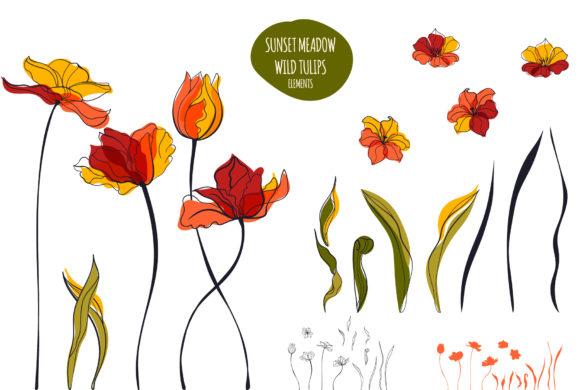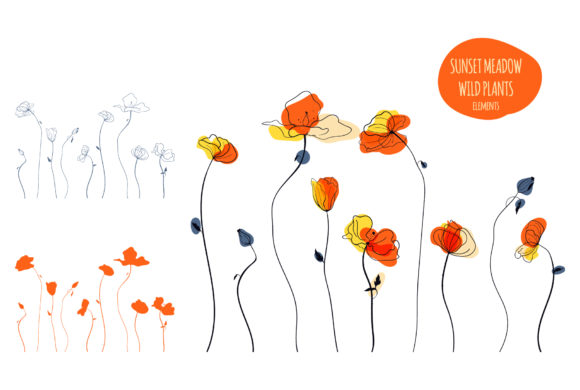
Sunset Meadow Wild Plants: A Practical Resource for Professionals and Creators
Working with native meadow species that capture the warm light of late afternoon has become more than a landscaping trend. For a wide range of professionals—designers, marketers, event planners, educators, and content creators—Sunset Meadow Wild Plants offers a tangible collection of plant profiles, seed sourcing strategies, and visual references that bridge ecological purpose with aesthetic demand. The resource isn't just a list of flowers; it's a structured approach to selecting, planting, and leveraging species that look their best during golden hour while supporting local pollinators and soil health.
What makes this worth discussing is the convergence of practical botany, visual storytelling, and low-input maintenance. Instead of piecing together scattered information from field guides and online forums, users have access to a curated set of species that have been evaluated for both their ecological function and their photographic presence. Whether you're designing an outdoor brand shoot, restoring a residential meadow, or building an educational curriculum around native ecosystems, Sunset Meadow Wild Plants compresses the learning curve.
What Defines the Core Species Selection
The heart of Sunset Meadow Wild Plants lies in its species palette. The plants included are overwhelmingly native to North American prairie and open woodland edges, chosen for their ability to catch and scatter light. Instead of emphasizing sterile hybrids or short-bloom annuals, the collection highlights perennials and self-seeding biotypes that shift through the seasons while remaining structurally interesting.
Typical entries include:
- Little Bluestem (Schizachyrium scoparium) – A warm-season bunchgrass that turns copper and amber in fall, its fine seed heads backlit into a translucent glow.
- Wild Bergamot (Monarda fistulosa) – Lavender flowers that attract a range of native bees and create soft color masses that read beautifully on camera.
- Black-eyed Susan (Rudbeckia hirta) – Reliable, long-blooming, and exposure-tolerant, with petals that hold detail even in direct low-angle sun.
- Purple Coneflower (Echinacea purpurea) – Sturdy, recognizable, and structurally important for pollinators while offering strong silhouettes.
- Goldenrod (Solidago spp.) – Often wrongly blamed for allergies, it provides late-season nectar and a cascade of yellow that anchors composition in wide shots.
Each species is documented with specific notes on bloom time, height, moisture tolerance, and light response. What separates this from a standard field guide is the consistent attention to how these plants perform photographically and how they layer in mixed plantings, not just how they grow in isolation.
Why Visual Thinkers Gravitate Toward This Resource
Sunset Meadow Wild Plants explicitly addresses a need that typical gardening manuals ignore: the way color temperature, shadow length, and stem translucency change under evening light. For photographers shooting backlit portraits, lifestyle product imagery, or editorial landscapes, knowing which species keep an open shape and which become dense black silhouettes matters. The resource includes practical tips on bloom-to-stem ratio, petal thickness, and how seed heads persist into winter—information that directly influences set design and shoot scheduling.
A marketer building a visual campaign for a natural skincare line could quickly cross-reference species that flower simultaneously in soft pinks and muted purples, then plant or source cut material accordingly. A wedding florist specializing in wild gathered arrangements benefits from the clear seasonality charts and the inclusion of airy filler grasses that catch sunset glow better than dense, dark foliage. This level of applied visual thinking moves Sunset Meadow Wild Plants beyond passive identification and into active creative planning.
Practical Value for Landscape and Restoration Projects
Beyond aesthetics, the resource works because the plants themselves are workhorses. Most species thrive without supplemental irrigation once established, tolerate a range of soil textures, and contribute to stormwater infiltration and pollinator corridors. For landscape architects and small-scale land managers, this translates into lower long-term maintenance budgets and stronger ecological performance without sacrificing curb appeal.
The guidance on plant communities—rather than individual specimen placement—is especially useful. Instead of recommending isolated “drifts” of a single flower, Sunset Meadow Wild Plants emphasizes functional layering: a base matrix of grasses like Bouteloua curtipendula (Sideoats Grama) with mid-height forbs that bloom in sequence, underplanted with early spring ephemerals that fill gaps before warm-season species emerge. This approach reduces weed pressure and mimics natural grassland dynamics, which a growing number of clients and municipalities now request for sustainable sites.
Quality and Presentation of Information
The organizational structure balances clarity with depth. Species profiles are grouped by light architecture—plants with open, airy inflorescences versus those with dense, mounded habits—rather than purely by botanical family. This design choice makes it faster for a non-specialist to find plants that match a specific visual brief, like “see-through layers for a hazy background” or “low groundcover that catches sidelight.”
Photographic references are consistently shot in directional, low-angle light, which isn't a given in many plant databases. You get a reliable preview of what the plant will look like when the sun is at 15 to 30 degrees above the horizon, not just under flat daylight. The text avoids overly academic jargon but doesn't oversimplify; terms like “cymes,” “panicles,” and “legume” are used where they matter for identification, and they are defined on first use. This professional restraint makes the material equally usable by a freelance content creator scouting a location and a restoration ecologist writing a management plan.
Consistency and Reliability in Real-World Use
When tested across different growing zones—from the humid Upper Midwest to the drier Front Range—most of the recommended seed mixes (available through partnered native seed suppliers) establish predictably if site preparation follows the outlined steps. Germination and first-year growth are slow, as expected with perennials, but by the second or third season, the meadow structure fills in according to the profiles. The resource doesn't overpromise instant results, which builds trust with the audience who understands that ecological planting runs on its own clock.
One strength worth noting is the attention to regional ecotypes. While the core palette leans toward species with broad native ranges, specific notes warn when a plant might become weedy outside its historical distribution, or when a local genotype would be a safer choice than generic commercial seed. This nuance helps prevent unintended ecological impact and reflects a genuine dual-competence in horticulture and conservation.
Flexibility for Different Professional Workflows
Sunset Meadow Wild Plants adapts to varied use cases without losing coherence. An educator building a school garden curriculum can extract the seasonal checklist and pollinator notes. A freelance designer working on agritourism branding can pull the color palette progression from early summer pink to late autumn gold and align it with visual identity materials. A publisher producing a coffee-table book on disappearing meadows can use the photo references as a shooting guide for location scouting.
Because the resource is not bound to a single proprietary product—no mandatory seed kit or app subscription—users can source materials locally or through regional native plant societies. The guidance remains applicable whether you are installing a half-acre meadow or cultivating five species in a rooftop planter for a private photo studio. That flexibility makes it a durable tool rather than a one-time purchase that ties you into a closed ecosystem.
Effectiveness in Long-Term Brand and Content Assets
For creators who rely on visual freshness, Sunset Meadow Wild Plants functions as an iterative asset. A single meadow planting yields changing backdrops across six to eight months, from the fine-textured green of emerging blades in April to the bronze-and-russet seed heads standing in December frost. A blogger or social media manager can plan an entire year's content calendar around these phenological shifts, reducing location-scouting fatigue and reinforcing a consistent aesthetic connected to place.
Small business owners in the hospitality and wellness sectors often struggle to find authentic imagery that separates them from generic stock. By commissioning or shooting original content in an actual sunset meadow designed with these species, they generate imagery that carries ecological authenticity—the specific insect activity, the irregular movement, the interplay of blooms that no styled set entirely replicates. Over time, that visual integrity becomes a quiet differentiator.
Who Gets the Most Value
The resource particularly serves professionals who need to connect land, light, and narrative. Landscape photographers, environmental educators, boutique hotel ground managers, creative directors for natural product brands, and event designers handling outdoor micro-weddings all find overlap here. It also speaks to serious hobbyists—native plant enthusiasts who want their garden to perform double duty as a personal retreat and a photography-ready microcosm.
Commercial growers considering a shift into specialty cut flowers may also use Sunset Meadow Wild Plants as a starting point for market research. The included species often have high vase life when conditioned properly, and the demand for unstructured, “field-to-vase” arrangements has stayed consistent across urban florist markets and direct-to-consumer subscriptions.
Limitations and Honest Observations
No plant resource is universally applicable. Species that excel in full sun, well-drained loam may struggle on heavy clay or in persistent shade. Users working in coastal fog belts or extremely arid high-desert basins will need to supplement with local analogs. The emphasis on sunset-hour aesthetics, while core to the concept, deliberately leaves out plants that shine only in morning light or under overcast skies—this is a focus, not an oversight, but it narrows the scope.
Another practical constraint is the timeline. A meadow established from seed requires patience; professionals planning a shoot or event within the same calendar year may need to use container-grown starts or rent an existing meadow location. The resource implicitly assumes a planning window of 12 to 18 months for full visual maturity, which should be weighed against project deadlines. Those who approach it as a quick decor fix will find the pace misaligned.
Finally, the interplay between the species and specific camera settings or drone work isn't covered exhaustively. While the lighting guidance is strong, videographers who need to factor in frame rate, motion blur in wind, or autofocus behavior through grass layers will need to test on their own. These are edges where the resource's practical limits become visible, but they don't undermine its core usefulness.
How to Approach the Material for Fastest Results
Rather than reading through from start to finish, many professionals will get the most by first identifying the three to five species that overlap their hardiness zone and soil type, then cross-referencing bloom calendars to ensure a continuous visual sequence. Pair that with at least two grass species that anchor the lower half of the frame and offer fall structure. For photography-only use, supplement with a few quick-flowering annuals like Coreopsis tinctoria for instant fill while perennials establish in the background.
Those integrating the plants into brand storytelling should document the progression across the first full season; the visual record itself becomes a long-term content library that far exceeds what a one-time shoot can provide. And if you're working with a public-facing space, small interpretive signage identifying the species can deepen audience engagement and subtly communicate your brand's environmental attention without overt messaging.
Sunset Meadow Wild Plants ultimately earns its place as a resource not by claiming to transform every plot of land, but by combining applied ecology with an honest understanding of how light and flora interact when creative work is on the line. For the professional who values precision, seasonality, and a visual language rooted in living systems, it fills a gap that standard catalogs and generic stock libraries rarely address.