The Quiet Power of Botanical Textiles: How Watercolor Blue Flower Seamless Patterns Are Redefining Visual Branding
In an era where visual saturation is the norm, the textures and motifs we choose carry more weight than ever. Among the most quietly influential design assets gaining traction across multiple industries is the Watercolor Blue Flower Seamless Pattern. It may sound specific—even niche—but its applications and the strategic thinking behind its use reveal something much larger about where commercial aesthetics, digital product design, and consumer psychology are heading.
This is not simply about florals. It is about how a specific rendering technique—watercolor—combined with a specific color psychology—blue—and a specific technical format—seamless repeat—creates a versatile asset that speaks directly to contemporary needs for authenticity, calm, and adaptability in visual communication.
Understanding the Asset: More Than a Pretty Print
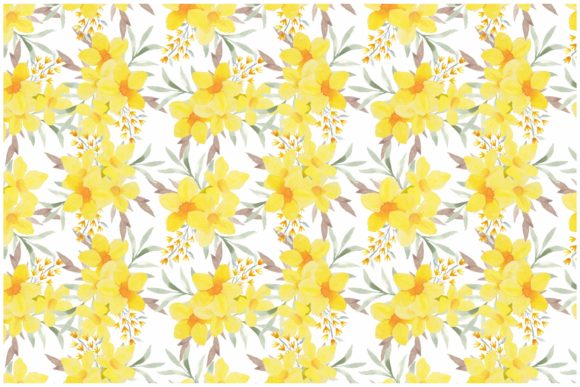
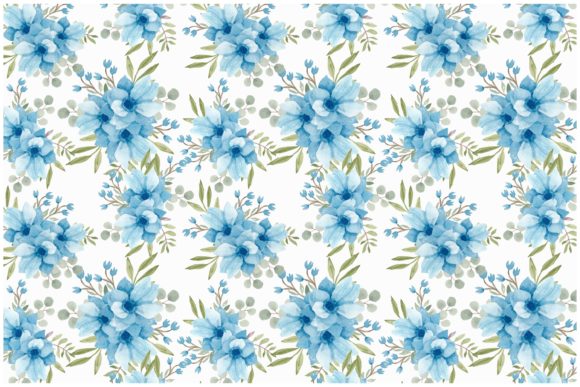
At its core, a Watercolor Blue Flower Seamless Pattern is a digital design file where hand-painted or digitally rendered watercolor floral motifs in shades of blue are arranged to tile infinitely without visible seams. The flowers may range from delicate cornflowers and hydrangeas to abstract botanical washes. The blue palette can span from pale cerulean and soft periwinkle to deep indigo and moody navy.
What distinguishes this asset from generic floral patterns is the watercolor quality itself. Unlike vector-flat illustrations, watercolor textures carry organic pigment dispersion, subtle paper-texture grain, and translucent layering. These imperfections communicate something flat digital designs often cannot: a sense of human touch, craftsmanship, and emotional warmth. When combined with blue—a color universally associated with trust, stability, and calm—the result is a pattern that feels both grounding and aspirational.
The seamless nature of the file means it can be tiled across any surface or screen dimension without visible cut lines. This makes it endlessly scalable for wallpaper, fabric, packaging, website backgrounds, stationery, and product skins. For professionals working across print and digital, this technical reliability is non-negotiable.
Why This Pattern Matters in the Current Design Economy
To understand why a Watercolor Blue Flower Seamless Pattern commands attention now, we need to look at converging trends across creative industries, consumer behavior, and technology platforms.
The Rise of Biophilic and Nature-Derived Design
Over the past five years, biophilic design has moved from architectural theory into mainstream visual culture. Consumers—exhausted by sterile, hyper-minimalist interfaces and synthetic aesthetics—gravitate toward imagery that references the natural world. Floral patterns are not new. But the watercolor treatment brings a softness that harsh digital renders lack. Blue flowers, specifically, evoke sky, water, and twilight gardens. They feel restorative rather than decorative.
This shift is measurable. Pinterest's annual trend reports and Adobe Stock's visual trend forecasts have repeatedly highlighted the growing demand for "soft botanical," "atmospheric floral," and "watercolor wash" aesthetics. The Watercolor Blue Flower Seamless Pattern sits squarely at the intersection of these search behaviors.
Calm Technology and Soothing User Experiences
As screen time increases and digital overwhelm becomes a documented wellness concern, designers and product teams are embracing "calm technology" principles. Interfaces are being designed to reduce cognitive load. Visual elements play a significant role in this. Harsh contrasts, aggressive patterns, and overly saturated colors create subconscious friction. In contrast, a seamless watercolor blue floral background introduces gentle visual rhythm without demanding attention. It supports content rather than competing with it.
For app designers, website builders, and digital product creators, incorporating a Watercolor Blue Flower Seamless Pattern as a background or accent element can subtly improve perceived usability and emotional response. This is not speculation—it aligns with color psychology research showing blue environments reduce stress and improve focus.
The Creator Economy and On-Demand Production
The explosion of print-on-demand services, direct-to-consumer brands, and independent creator storefronts has fundamentally changed how design assets are consumed. Entrepreneurs launching product lines no longer commission custom patterns from scratch. They license or purchase high-quality seamless patterns and apply them to fabric, mugs, phone cases, stationery, and home decor.
A Watercolor Blue Flower Seamless Pattern is particularly well-suited to this model. Its timeless appeal works across seasons. The blue palette adapts to coastal, cottagecore, modern farmhouse, and even contemporary minimalist aesthetics. For a small business owner who needs one pattern to span multiple products and customer demographics, this versatility represents exceptional value.
Practical Applications Across Professional Contexts
The theoretical appeal of this pattern type becomes concrete when we examine how different professionals are putting it to work.
Brand Identity and Packaging Design
For wellness brands, boutique skincare lines, artisanal food producers, and lifestyle coaches, packaging must convey purity, care, and differentiation. A Watercolor Blue Flower Seamless Pattern on a product box, tissue paper, or label immediately communicates handcrafted quality and botanical integrity. Unlike solid color packaging or stark typographic treatments, the watercolor floral motif tells a story before the customer reads a single word.
Consider a small-batch soap maker. Their values center on natural ingredients, sustainability, and gentle formulations. A crisp white box with a subtle watercolor blue floral pattern wrapped around the sides visually reinforces every verbal claim. The seamless nature of the file ensures the pattern wraps continuously around corners, maintaining professional polish.
Digital Products and Content Creation
Freelance designers and content creators use seamless patterns as backgrounds for social media templates, digital planners, e-book covers, and presentation decks. The Watercolor Blue Flower Seamless Pattern works especially well for industries like coaching, mental health, holistic nutrition, and creative education—fields where warmth and authority must coexist.
A life coach selling a digital journal on Etsy might use this pattern as a section divider or cover design. The blue flowers signal calm introspection. The watercolor texture adds depth that flat graphics cannot achieve. And because the file is seamless, it can be scaled across an A4 page or a square Instagram post without distortion.
Interior Design and Home Décor Manufacturing
On the manufacturing side, textile producers and wallpaper companies license seamless patterns for mass production. The Watercolor Blue Flower Seamless Pattern aligns with the enduring popularity of blue in interior design—consistently ranked among the most popular color families for bedrooms, bathrooms, and living spaces. Watercolor florals offer a softer alternative to bold geometrics or heavy damasks, making them ideal for upholstery, bedding, curtains, and accent walls.
Interior designers working on hospitality projects—boutique hotels, wellness retreats, spa facilities—often specify custom wallcoverings and soft furnishings that evoke serenity. A blue watercolor floral in a seamless repeat can wrap an entire headboard wall or line restaurant banquettes, creating an immersive but not overpowering botanical atmosphere.
Why Blue Flowers Specifically? The Semiotics of Color and Form
Not all floral patterns carry the same symbolic weight. Red roses evoke passion. Yellow sunflowers suggest cheerfulness. Blue flowers—delphiniums, forget-me-nots, hydrangeas, cornflowers—carry meanings of tranquility, reflection, trust, and the ethereal. In color psychology, blue is the most universally favored color. It crosses cultural boundaries with relatively consistent positive associations.
When rendered in watercolor, blue flowers become even more evocative. Watercolor's inherent translucency creates luminosity—the sense that light is passing through the pigment. This gives blue watercolor florals an atmospheric, dreamlike quality. They feel less literal than oil-painted or photographic florals, leaving room for the viewer's interpretation and emotional projection.
For brands and creators, this semiotic flexibility is powerful. The pattern works for a wedding invitation suite as well as a meditation app background. It can anchor a luxury skincare campaign or a children's book illustration. The blue watercolor floral does not dictate a single mood or message—it adapts to its context while consistently contributing a sense of refinement and calm.
The SEO and Discoverability Factor for Creators
From a search perspective, the phrase Watercolor Blue Flower Seamless Pattern represents a specific, intent-rich query. Someone typing this into a search engine or a stock platform like Creative Market, Etsy, or Adobe Stock knows what they want. They are not browsing abstractly—they have a project, a product, or a client brief that requires this exact aesthetic.
For designers selling digital assets, optimizing product titles, descriptions, and tags with this phrase—along with related terms like "soft floral repeat," "blue botanical background," "watercolor seamless texture"—improves visibility among high-intent buyers. The specificity is the advantage. Broad terms like "floral pattern" face immense competition. The long-tail specificity of Watercolor Blue Flower Seamless Pattern filters for buyers further along in their decision-making process.
Quality Indicators and What Professionals Should Look For
Not all seamless patterns are created equal. Professionals evaluating a Watercolor Blue Flower Seamless Pattern should consider several quality factors beyond the visual appeal.
- Seamless integrity: The repeat must be truly continuous. Poorly executed tiles show visible grid lines or awkward jumps in the pattern flow. This becomes painfully obvious on large-format prints or scrolling backgrounds.
- Resolution and file format: For print applications, 300 DPI minimum is essential. Vector-compatible formats or high-resolution raster files ensure the pattern remains crisp on physical products.
- Color variation: A thoughtful blue palette with tonal depth—highlights, midtones, and shadows—creates a more professional result than a flat, monochromatic blue wash.
- Edge handling: In watercolor patterns, the organic edges of pigment washes should feel natural, not abruptly clipped or artificially feathered.
- Licensing clarity: Commercial use rights, print-on-demand permissions, and attribution requirements should be explicitly stated. Ambiguous licensing creates legal risk for businesses.
How Changing Workflows Increase Demand for Ready-Made Patterns
The growing normalization of remote work, freelance portfolios, and lean startup models means more professionals are operating without in-house design teams. A marketing consultant building a client presentation, a course creator designing workbook pages, or a small café owner refreshing their menu design—all need polished visual assets without the budget for custom illustration.
The Watercolor Blue Flower Seamless Pattern fits into this democratized design landscape perfectly. It is a professional-grade asset accessible to non-designers through platforms like Canva, while still offering enough quality and flexibility for professional designers to incorporate into complex brand systems. This broad usability spectrum expands its relevance far beyond a single niche.
Aesthetic Longevity and Investment Value
Trends come and go, but certain visual archetypes persist. Blue floral patterns have remained commercially relevant for decades, from traditional chinoiserie to 1990s shabby chic to today's modern botanical revival. The watercolor treatment, while currently resonant, has also shown remarkable staying power due to its association with fine art and handcraft.
For businesses investing in brand assets or product lines, choosing a Watercolor Blue Flower Seamless Pattern means betting on aesthetic longevity rather than a fleeting micro-trend. This pattern type does not scream a specific year or season. It references something older—botanical illustration, watercolor painting, garden romanticism—while remaining adaptable to contemporary color palettes and layout styles. This makes it a safer long-term investment than aggressively trendy patterns tied to a moment.
Connecting to Larger Industry Movements
Zooming out, the relevance of this specific pattern connects to several macro-level developments:
- Sustainable and slow design: The watercolor aesthetic, with its visible brush marks and organic pigment flow, aligns with values of slowness, intention, and imperfection. It visually rejects the polished, airbrushed perfection that characterized early digital design. Brands communicating sustainability find natural allies in textures that feel handmade.
- Emotional branding: As purchase decisions become increasingly values-driven and emotionally motivated, visual assets that evoke feeling rather than simply displaying information gain strategic importance. A Watercolor Blue Flower Seamless Pattern on packaging or a website evokes calm, beauty, and nature—emotions that build brand affinity over time.
- The customization economy: With advances in digital printing and on-demand manufacturing, businesses can offer personalized products featuring seamless patterns. A watercolor blue floral can be recolored, scaled, or combined with monograms and custom text, supporting the growing consumer expectation for tailored experiences.
Final Observations for Professionals and Creators
The Watercolor Blue Flower Seamless Pattern is not merely a design trend to observe from a distance. It is a practical, strategically valuable asset category that reflects deeper shifts in how visual communication functions across industries. For marketers, it offers a way to soften brand presence without losing authority. For product creators, it provides a versatile surface design that works across multiple categories. For digital designers, it introduces organic warmth into interfaces that can otherwise feel cold and transactional.
Understanding the why behind this pattern's relevance—the convergence of color psychology, biophilic preference, seamless scalability, and the rise of human-centered aesthetics—equips professionals to make more intentional creative decisions. Whether sourcing assets for a client project, building a product line, or refining a personal brand identity, the thoughtful application of watercolor blue floral elements can elevate the work from merely competent to genuinely resonant.
The specific phrase may be long-tail, but the concept it represents is broad and deeply embedded in the way visual culture is evolving. Those who recognize this will find endless ways to apply it with purpose and impact.