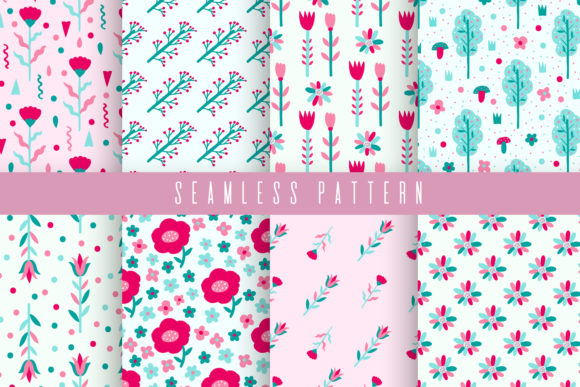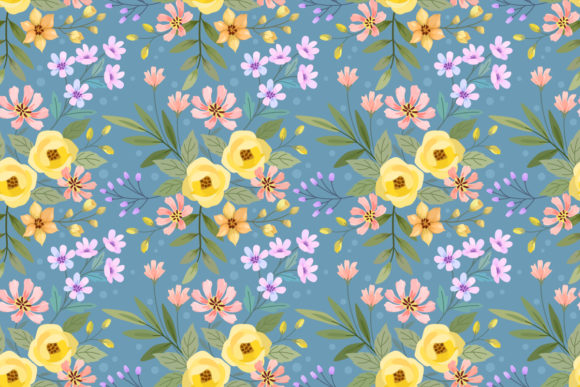
The Vibrant World of Colorful Hand-Drawn Flower Pattern Design
There is something deeply human about a hand-drawn flower. Unlike the geometric precision of digital vectors, a sketchy petal or a watercolor bloom carries the heartbeat of the artist. Colorful hand-drawn flower pattern design sits at the intersection of botanical beauty, artistic expression, and functional design. It appears on the wallpaper of a boutique hotel, the packaging of organic tea, the summer dress you reach for on a sunny morning, and the greeting card you save in a drawer. But what makes this style so enduring, and why does it matter in an age of artificial intelligence and automated design tools? Understanding this art form means looking at its history, its creative process, its practical applications, and the subtle emotional resonance that keeps it in demand.
What Defines a Hand-Drawn Floral Pattern
At its core, a hand-drawn flower pattern is a repeatable motif created using analog or analog-inspired techniques. The term hand-drawn signals imperfection. Lines waver slightly. Colors bleed outside edges. Petals are never identical twins. This asymmetry is the entire point. Designers use pencils, pens, brushes, pastels, charcoal, or digital styluses that mimic real media. The defining characteristic is the visible presence of the maker's hand — a fingerprint of creativity that no algorithm can fully replicate.
A colorful version amplifies the emotional range. It uses bold palettes, unexpected contrasts, or gentle gradients to evoke specific moods. Think of tropical monstera leaves rendered in neon pinks and oranges, or delicate wild roses painted in muted pastels. The color transforms the botanical subject from a literal plant into a vessel for feeling. A monochrome ink drawing of a peony feels elegant and restrained, but saturate it with coral, magenta, and golden yellow, and it becomes celebratory, youthful, and alive.
Common elements within these designs include single repeated motifs, scattered bouquets, seamless flowing vines, or structured damask-like arrangements. The style can lean toward folk art simplicity, botanical illustration accuracy, or abstract expressionism. What unites them is the deliberate choice to keep the artist's gesture visible, rejecting the sterile perfection of purely computer-generated forms.
A Brief Journey Through Botanical Decoration
Humans have been drawing flowers for as long as they have been decorating living spaces and bodies. From ancient Egyptian tomb paintings featuring lotus blooms to the intricate floral borders of medieval illuminated manuscripts, flower motifs have carried symbolic weight. The 18th and 19th centuries saw an explosion of botanical illustration, where artists combined scientific accuracy with aesthetic beauty. These detailed plates influenced textile design, wallpaper, and ceramics across Europe and Asia.
The Arts and Crafts movement, led by figures like William Morris, pushed back against industrial mass production by insisting on the value of handmade decorative arts. Morris created dense, repeating floral wallpapers that are still reproduced today. His philosophy — that everyday objects should be beautiful and made with care — directly connects to the modern appreciation for hand-drawn pattern design. The mid-20th century brought mid-century modern stylization, with abstracted and often playful floral shapes. Now, in the 21st century, we see a fusion: traditional watercolor techniques scanned and turned into digital repeats, or fully digital illustrations that simulate ink, gouache, or pastel with astonishing realism.
Why Hand-Drawn Matters in a Digital-First World
We live surrounded by screens displaying perfect vectors and auto-generated layouts. In this context, a hand-drawn floral pattern feels like a breath of fresh air. It introduces warmth, nostalgia, and authenticity. Brands use it to signal that they are human, approachable, and artisanal. A skincare company might choose a colorful, loose watercolor bouquet for its product labels to communicate natural ingredients and gentle care. A tech startup might use a quirky, hand-drawn flower icon set to soften its brand voice and show creativity over coldness.
There is a psychological comfort in organic imperfection. Studies in biophilia and design psychology suggest that shapes evoking nature, even in stylized form, reduce stress and increase perceived well-being. A colorful hand-drawn flower pattern on a notebook cover or phone case isn't just decoration — it's a small dose of nature mimicry that our brains respond to on a primal level. It tells a story of time, effort, and human presence that mass-produced geometric grids cannot.
Practical Applications Across Industries
The versatility of this design style is staggering. It stretches across nearly every surface and product category imaginable.
- Fashion and Textiles: Flowing rayon dresses, silk scarves, embroidered denim jackets, and printed cotton shirts all benefit from hand-drawn floral repeats. Designers like to play with scale — tiny ditzy floral prints for vintage charm, oversized painterly blooms for dramatic runway statements.
- Home Décor and Interiors: Removable wallpapers, upholstered furniture, cushion covers, bedding sets, and ceramic tiles. A hand-painted look on a porcelain vase can elevate an entire room. The trend of "grandmillennial" style leans heavily into chintz and updated floral prints.
- Stationery and Paper Goods: Greeting cards, wrapping paper, notebooks, planners, and stickers form a massive market. Here, the colorful hand-drawn style often leans playful and whimsical, using bright palettes and simplified shapes.
- Branding and Packaging: From wine labels and chocolate bars to boutique soap wrappers and coffee bags, floral illustrations set a premium, handcrafted tone. Consumers often associate this aesthetic with small-batch quality and ethical sourcing.
- Digital Products and Interfaces: Website backgrounds, app splash screens, social media templates, and digital wallpapers. Soft, colorful florals can make a website feel welcoming without overwhelming the content. They are also popular for digital planners and Notion templates.
The Creative Process: From Blank Page to Repeating Pattern
Understanding how these patterns are made demystifies the art and helps both aspiring designers and curious consumers appreciate the work involved. The process typically follows several stages, whether executed with physical paint or a digital pen.
- Inspiration and Gathering: Designers collect reference material. This could mean observing actual flowers in a garden, studying botanical books, browsing vintage textiles, or curating color palettes from photographs. Mood boards help define the intended feeling — romantic, tropical, minimalist, folkloric.
- Loose Sketching and Element Creation: Individual flowers, leaves, buds, and stems are drawn separately. Artists often fill pages with different angles and variations. The goal here is to generate a library of raw components. The marks remain fresh and spontaneous.
- Coloring and Texturing: Watercolor washes, colored pencil shading, gouache opacity, or digital brushes build depth and vibrancy. Layering is crucial. A yellow center might be dotted with brown speckles; a green leaf might show veins and light spots.
- Digitizing and Cleaning: If created traditionally, the artwork is scanned at high resolution. Backgrounds are removed, colors are adjusted, and elements are isolated into transparent PNG files using software like Adobe Photoshop or Procreate.
- Building the Repeat: This is the technical heart of pattern design. Using Adobe Illustrator or specialized tools, the designer arranges the motifs within a square tile boundary. Elements that touch the top edge must seamlessly continue on the bottom edge, and similarly for left and right. Half-drop and brick repeats create diagonal movement, while basic grid repeats offer symmetry. This takes careful adjustment to avoid awkward gaps or accidental clusters.
- Testing and Refining: The pattern is tiled across a large canvas to check for visible seams, unintended lines, or rhythmic clumps. Color balance is viewed at actual size. Adjustments are made, and the final repeat tile is saved for production.
Many modern designers skip the physical stage entirely, using an iPad and Apple Pencil with apps that offer incredibly realistic brush engines. The distinction between "real" and "digital" has blurred. As long as the artist's hand guides every stroke and color choice, the result retains that hand-drawn soul.
Choosing and Working with Floral Patterns
If you are a business owner, a maker, or simply someone redecorating a room, selecting the right colorful hand-drawn flower pattern can feel overwhelming. The sheer volume of options online and in surface design marketplaces is immense. Here are some guiding thoughts.
Consider the mood you want to create. A dense, dark-background floral with jewel tones communicates luxury and drama — think velvet sofas and winter evenings. An airy, watercolor pattern on a white background with scattered pastel peonies feels fresh, clean, and springlike. Scale matters critically too. Large motifs demand attention and work best on uncluttered surfaces or as accent pieces. Dainty, small-scale repeats are forgiving and timeless for clothing and everyday items.
Pay attention to the hand-drawn quality itself. Is the linework loose and sketchy, or tight and deliberate? Does the color appear to pool and granulate like real watercolor, or is it flat and uniform? These subtle variables shift the entire aesthetic from fine art to naïve folk to modern minimalism. If commissioning a custom pattern, communicate these preferences clearly with reference images.
For commercial use, licensing is a critical topic. Buying a digital pattern file does not always grant unlimited reproduction rights. Always check whether the license covers personal use, limited commercial runs, or mass manufacturing. Respecting the artist's terms is part of maintaining a fair creative ecosystem.
Clearing Up Common Misunderstandings
A persistent assumption is that hand-drawn flowers are inherently old-fashioned or only suitable for feminine, traditional contexts. This is simply not true. Contemporary illustrators have reimagined the genre with edgy color palettes — black backgrounds with neon blooms, monochrome line art with a single pop of red, distorted proportions, and collaged textures. Hand-drawn florals appear in streetwear, skateboard decks, album covers, and bold modern branding. The style is a starting point, not a limitation.
Another frequent confusion is equating "hand-drawn" with "unskilled doodling." The most compelling patterns achieve a controlled spontaneity that takes years of practice. The artist knows exactly when to let a brush stroke taper into nothing, where to place a shadow for depth, and how to balance negative space around a bouquet. There is profound skill in making something look effortless and alive.
Some also believe that a pattern is simply a random scattering of elements. In reality, a well-designed repeat considers visual weight distribution, color rhythm, and directional flow. A pattern that goes unnoticed and feels natural is often the most technically sophisticated. The craft is invisible, and that is precisely the mastery.
The Future of Floral Pattern Design in Technology
Artificial intelligence image generators can now produce floral patterns in seconds. This raises questions about the value of human-made work. Yet even as AI tools advance, the demand for authentic artistic voice grows louder. An AI can approximate a watercolor rose, but it cannot replicate the lived experience, cultural grounding, and emotional intent behind a designer's series of trials, mistakes, and breakthroughs. The market is increasingly valuing provenance — the story of who made it and why.
Technology is also empowering artists in new ways. Augmented reality lets customers visualize a hand-drawn wallpaper on their own walls before purchasing. Print-on-demand services allow independent designers to offer their patterns on fabric, mugs, and phone cases without inventory risk. Blockchain technology is being explored for tracking ownership and licensing of digital art files. The ecosystem is evolving, but the core act of a human hand interpreting a flower remains as compelling as ever.
Moreover, the sustainability conversation intersects with pattern design. Digital printing reduces water waste compared to traditional textile dyeing. Designers are creating patterns for organic fabrics and upcycled materials, merging environmental consciousness with aesthetic beauty. A colorful hand-drawn flower on a repurposed linen shirt tells a layered story: nature's beauty, human creativity, and care for the planet.
Bringing the Beauty Home
You don't need to be a professional designer to engage with this art. Learning to draw simple floral elements and creating your own pattern — even a wonky, imperfect one — can be a deeply satisfying creative practice. It sharpens observation, as you begin to notice the spiral of a rose center, the serrated edge of a cherry blossom leaf, the way light hits a tulip's waxy surface. Free tutorials, affordable brush pens, and tablet apps have lowered the barrier to entry enormously.
For those who prefer to appreciate the work of others, supporting independent surface designers through their shops, Patreon, or licensing marketplaces directly sustains a human-centered creative economy. Every colorful hand-drawn flower pattern on a product you love is a culmination of observation, skill, color theory, and courage — because putting your handmade marks out into the world remains an act of vulnerability and generosity.
In a culture that often prioritizes speed and uniformity, these patterns are a quiet rebellion. They remind us that imperfection is beauty, that nature is an endless teacher, and that the human hand still holds unmatched expressive power. The next time you see a colorful floral design on a dress, a wall, or a screen, take a moment to look closer. You might notice the slight wobble of a stem, the unexpected blending of two colors, the tiny negative space shaped like a teardrop between petals. That is where the magic lives.
The story of colorful hand-drawn flower pattern design is still being written, one bloom at a time, by artists around the world who pick up their tools and ask, what if I draw this flower and see where it goes? The answer, on fabric and paper and glass, is always unfolding.