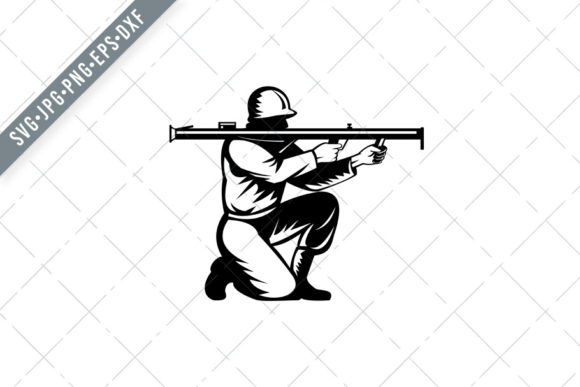
What a World War Two Soldier Aiming Bazooka Image Brings to Modern Visual Projects
Finding the right historical photograph or illustration can shift the entire tone of a project. A World War Two Soldier Aiming Bazooka image is one of those assets that immediately communicates tension, era, and human determination. It is not simply a military snapshot. For publishers, educators, designers, and content creators, it represents a concentrated moment of 1940s combat reality—one that carries layers of symbolic weight and practical utility.
Many creative professionals overlook how much heavy lifting a single well-chosen historical image can perform. This particular subject—a soldier sighting a target with a shoulder-fired anti-tank weapon—combines technological context, human emotion, and period authenticity in ways that generic wartime photos rarely achieve. Understanding what makes this type of asset valuable helps decide whether it deserves a place in your next layout, lesson, or campaign.
The Visual Anatomy of a Bazooka Combat Scene
Images depicting a soldier aiming a bazooka typically share several compositional traits that affect their usefulness. The weapon itself dominates the frame or a significant portion of it. The M1 or M9 bazooka tube extends forward, often at a slight upward angle, creating a strong diagonal line that draws the eye across the composition. The soldier's posture—crouched, kneeling, or braced against terrain—conveys the physical demands of operating a 13-pound launch tube under combat conditions.
What separates a generic wartime image from one worth using lies in the details. Look for uniform accuracy, including the M1941 field jacket or later M1943 patterns, helmet netting, and web gear arrangement. The presence of an assistant loader, sometimes visible preparing a rocket round, adds procedural authenticity. Background elements—whether a European hedgerow, Pacific foliage, or urban rubble—anchor the image in a specific theater and campaign context.
Lighting and film stock characteristics also matter. Original black-and-white photography from the period exhibits particular contrast ratios and grain structures that signal authenticity to viewers familiar with archival material. Colorized versions, while sometimes controversial among historians, may serve different audiences better, particularly younger viewers or those accustomed to modern documentary aesthetics.
Practical Applications Across Multiple Fields
The versatility of a World War Two Soldier Aiming Bazooka asset extends further than many initially assume. Its usefulness is not confined to military history publications.
Publishers and authors working on historical nonfiction, memoirs, or even historically-informed fiction can use such imagery for cover designs, chapter headings, or interior illustrations. The bazooka's recognizable silhouette immediately signals the era without requiring explanatory text. A book covering the European Theater, the Pacific campaign, or broader topics like infantry anti-tank tactics benefits from the specificity this image provides.
Educators and curriculum developers find these assets valuable for presentations, worksheets, and digital learning modules. A photograph of a soldier actively employing a bazooka illustrates technological adaptation in warfare more effectively than paragraphs of description. Students grasp the asymmetry between infantry-portable weapons and armored vehicles when they see the relative scale of soldier to weapon to implied target.
Documentary producers and video editors frequently need still images for B-roll sequences, title cards, or thumbnail designs. A high-resolution scan of an original bazooka photograph can hold up under digital zoom and pan effects better than lower-quality alternatives. The drama inherent in the aiming posture provides visual momentum that keeps viewers engaged during narrative transitions.
Marketing professionals occasionally draw on historical military imagery for campaigns tied to commemorative events, historical anniversaries, or products with heritage branding. The bazooka—as an iconic piece of mid-century technology—can serve as a visual shorthand for innovation, American industrial capability, or the citizen-soldier archetype, depending on the messaging context.
Bloggers and content creators covering military history, weapons technology, or 20th-century culture use these images to break up text, create featured images, and strengthen arguments with visual evidence. A well-placed photograph of a bazooka team in action supports analysis of infantry doctrine evolution or the practical challenges faced by ordinary soldiers tasked with destroying tanks.
Evaluating Quality and Authenticity
Not every World War Two Soldier Aiming Bazooka image meets professional standards. The difference between a usable asset and a problematic one often comes down to resolution, provenance, and post-processing integrity.
Resolution requirements depend on the intended platform. Print projects demand minimum effective resolutions of 300 DPI at the target dimensions. A 4x6-inch print reproduction requires roughly 1200x1800 pixels of clean image data. Digital use is more forgiving, but even website hero images benefit from source files exceeding 2000 pixels on the long edge to accommodate responsive sizing and cropping.
Provenance matters when historical accuracy carries professional or reputational stakes. Images sourced from the National Archives, Library of Congress, or reputable stock platforms with verified metadata reduce the risk of misidentifying equipment, units, or locations. An incorrectly captioned photograph can undermine an otherwise authoritative publication. Some commercially available images originate from private collections or estate sales, where verification may prove more challenging.
Post-processing interventions—sharpening, contrast adjustments, dust and scratch removal—can enhance usability but may also introduce artifacts or alter historical details. Excessive noise reduction can smear uniform textures and facial features. Aggressive sharpening creates halos around the bazooka tube and helmet edges. The most useful assets either arrive with minimal processing or provide access to the unaltered scan alongside the cleaned version.
Licensing Considerations That Affect Usability
Professional users must navigate licensing with care. Public domain status applies to many official U.S. military photographs from the Second World War, but not universally. Images captured by civilian photographers, allied nation personnel, or private entities may carry residual copyright claims depending on jurisdiction and publication history.
Royalty-free licenses from stock platforms simplify commercial usage but typically restrict resale as standalone products. Extended licenses may be necessary for merchandise, print-on-demand products, or large-print-run publications. Editorial-use-only restrictions commonly apply to images depicting identifiable individuals where model releases are impossible to obtain. Understanding these boundaries prevents costly corrections after publication.
For educators and non-profit users, many institutions offer special terms or fee waivers. Museums, historical societies, and government archives sometimes provide high-resolution files at reduced cost or no charge for qualifying educational projects. Building relationships with these institutions can yield access to less commonly circulated images that differentiate your work from competitors relying on the same widely available photographs.
Strengths That Make This Subject Worth Selecting
Several characteristics give the bazooka-aiming soldier image category enduring practical value. The weapon's visual distinctiveness tops the list. Unlike rifles or machine guns, which can blur together across conflicts and eras, the bazooka's tubular profile immediately anchors the viewer in the mid-1940s. No other period weapon—save perhaps the Panzerfaust or PIAT—carries quite the same visual signature, and those alternatives signal different national contexts.
The aiming posture itself tells a story. The soldier's focused attention on a target outside the frame creates narrative tension that static portraits or marching photos lack. Viewers instinctively wonder what the soldier sees, whether the rocket will find its mark, and what happens next. This implied narrative makes the image more memorable and more engaging when used in presentations or editorial layouts.
Emotional range within the subject category also provides flexibility. Some images capture the tension of combat—the soldier's face tight with concentration, body coiled for the recoil. Others show training scenarios, where the expression might convey determination or even a hint of confidence. Still others document moments of rest between engagements, the bazooka held casually but never far from reach. Having access to images across this emotional spectrum lets you match the visual tone to your specific message.
Realistic Limitations and Where Alternatives May Serve Better
A balanced evaluation requires acknowledging scenarios where a World War Two Soldier Aiming Bazooka image may not be the strongest choice. The specific weapon focus narrows the historical window considerably. The U.S. bazooka entered service in 1942 and saw its most intensive use from 1943 through 1945. Projects covering earlier periods or post-war conflicts need different imagery.
The inherently masculine and combat-oriented nature of the imagery limits its appropriateness for certain contexts. Organizations seeking to represent the broader wartime experience—including the roles of women, civilians, logistics personnel, and medical staff—will need supplementary visuals. Relying exclusively on combat images creates an incomplete historical picture.
Audience sensitivity also warrants consideration. Some viewers may find weapon imagery distressing or glorifying of violence. Educational publishers targeting younger age groups often prefer depictions of equipment being demonstrated, transported, or maintained rather than actively aimed in combat. Understanding your audience's comfort level with weapon imagery guides appropriate selection.
Competition from similar assets can also affect the distinctiveness of your project. The bazooka photograph has become something of a visual trope in World War II publishing. Highly circulated images risk appearing in multiple competing works, reducing the freshness your project brings. Seeking out lesser-known photographs from specialized archives or unit histories can provide similar subject matter with greater uniqueness.
Integration Strategies for Maximum Impact
How you deploy a historical combat photograph significantly affects its contribution to your project. Contextual placement matters as much as the image itself.
In print layouts, allowing the image room to breathe—rather than constraining it to a small column width—honors the detail and drama the photographer captured. Full-page or double-truck placements work well for high-impact historical images, provided the resolution supports the enlargement. Pairing the photograph with detailed captions that identify the unit, location, date, and equipment variant demonstrates scholarly rigor and serves reader curiosity.
Digital implementations benefit from thoughtful cropping that preserves the composition's integrity while accommodating responsive breakpoints. The soldier and bazooka should remain the clear focal point even at smaller sizes. Overlaying text directly on combat photographs requires careful contrast management; semi-transparent dark overlays or text placement against relatively uniform background areas maintain readability without obscuring key visual elements.
For video and multimedia projects, the Ken Burns effect—subtle panning and zooming across the still image—remains effective when applied with restraint. The diagonal line of the bazooka tube provides a natural axis for motion that guides viewer attention. Pairing still images with period-appropriate sound design—distant artillery, radio chatter, or even silence—amplifies emotional resonance.
Who Stands to Gain the Most From This Asset
Certain professional profiles align particularly well with the strengths of a World War Two Soldier Aiming Bazooka image. Military history content creators—whether running YouTube channels, podcasts with companion websites, or subscription newsletters—find these visuals essential for thumbnails and feature images that drive engagement. The dramatic posture and recognizable weapon profile perform well in click-through contexts where visual distinctiveness matters.
Independent authors producing World War II fiction or narrative nonfiction for the self-publishing market benefit from affordable, licensable cover art elements. A strong historical photograph, properly licensed and professionally integrated into a cover design, can compete visually with traditionally published titles at a fraction of the custom photography cost.
Museum educators and exhibit designers working with limited budgets appreciate the availability of high-quality historical imagery that can be printed at scale for display panels. A large-format print of a soldier aiming a bazooka, accompanied by informative text and perhaps an artifact display of the weapon itself, creates an immersive educational experience without requiring expensive original artwork commissions.
Small business owners in the historical tourism, battlefield guide, or military collectibles sectors use such images for promotional materials, website backgrounds, and social media content. The imagery signals expertise and authentic connection to the subject matter, building credibility with a knowledgeable customer base that recognizes and values historical accuracy.
Long-Term Value and Archival Considerations
Historical photographs, unlike contemporary stock imagery, do not date in the same way. A World War II photograph was already decades old when digital publishing emerged, and it will remain historically relevant as long as interest in the period persists. This makes such assets relatively stable investments compared to lifestyle or technology photography, which can look dated within a few years.
However, the long-term utility of any specific historical image depends partly on its distinctiveness. As more publishers, creators, and educators access the same public domain or widely licensed images, some photographs become so ubiquitous that they lose impact. The most sustainable approach involves building a personal collection of varied images across the subject spectrum—bazooka teams in different theaters, weather conditions, and emotional states—so that individual assets can be rotated and combined in fresh configurations over time.
Metadata management also affects long-term value. Maintaining accurate records of source, licensing terms, resolution, and any known restrictions prevents confusion when revisiting assets months or years after acquisition. A photograph whose provenance is forgotten becomes a liability rather than an asset, particularly for commercial projects where rights verification may be required.
For those who regularly incorporate historical military imagery into their work, the World War Two Soldier Aiming Bazooka category represents a dependable, versatile option that continues to serve across media types and audience demographics. Its combination of dramatic tension, historical specificity, and broad recognition makes it a practical choice for projects ranging from educational materials to commercial publications. Understanding its strengths, limitations, and optimal integration methods ensures that each use extracts the full value the image offers.