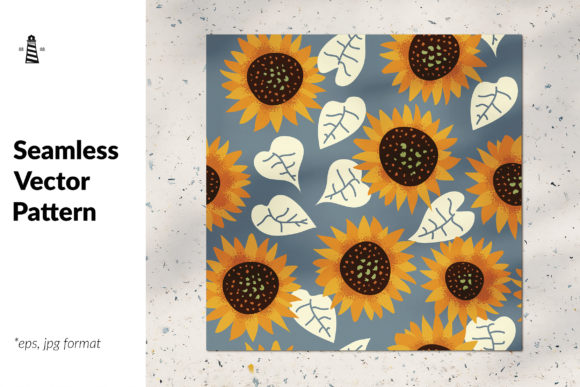
Why Sunflowers Seamless Patterns Are Taking Over Modern Design
Picture a field of golden blooms stretching endlessly in every direction, each flower turned toward the light. Now imagine capturing that boundless energy in a single, repeating surface that can wrap around anything from a phone case to a living room wall. That is the magic of a sunflowers seamless pattern. At its core, this design concept is exactly what it sounds like—a motif featuring sunflowers arranged in a way that tiles perfectly, without visible edges or interruptions, creating an infinite, flowing visual. But behind that simple definition lies a rich intersection of art, technology, psychology, and commerce that makes this seemingly straightforward pattern one of the most versatile tools in contemporary design.
Whether you are a small business owner looking to refresh your product line, a crafter searching for the perfect fabric, or simply someone who loves the cheerful presence of sunflowers in your everyday surroundings, understanding how these patterns work and why they matter can open up a world of creative possibility. In this article, we will explore the sunflower seamless pattern from every angle—what it is, how designers create it, where it shows up in daily life, and why it carries such lasting appeal across cultures and industries.
What Exactly Is a Seamless Pattern?
Before diving into sunflowers specifically, it helps to understand what makes any pattern "seamless." A seamless pattern—also called a repeat pattern or tileable design—is a surface motif that can be duplicated and placed side by side with itself infinitely, in any direction, without producing visible lines, gaps, or mismatches at the borders. Imagine a square tile that, when copied and placed next to the original, blends perfectly so that you cannot tell where one tile ends and the next begins. That is the fundamental principle.
Designers achieve this effect through precise digital or hand-drawn techniques. The most common method involves creating a design within a defined square or rectangular canvas and then carefully aligning elements along the edges so that the left side connects seamlessly to the right side, and the top aligns with the bottom. When the pattern repeats, the eye perceives one continuous, uninterrupted surface rather than a grid of separate blocks. This illusion of infinity is what gives seamless patterns their professional, polished appearance and makes them invaluable for manufacturing.
The Basic Structure of a Repeat Pattern
- Block repeat: The simplest form, where the motif is placed in a straight grid, repeating evenly both horizontally and vertically.
- Half-drop repeat: Each row is offset by half the width of the tile, creating a staggered, more dynamic layout that feels less rigid.
- Brick repeat: Similar to a half-drop but offset horizontally, resembling the way bricks are laid in a wall.
- Diamond or tossed repeat: Elements are rotated or scattered in a way that still connects at the edges, producing a more organic, random-looking result.
For sunflowers seamless patterns, designers often use half-drop or tossed repeats to mimic the natural, slightly irregular way flowers grow in a field. A perfectly rigid grid of identical sunflowers can feel artificial, so subtle variations in size, rotation, and placement help the pattern breathe and feel alive.
The Timeless Allure of Sunflowers in Visual Culture
Sunflowers have captivated human imagination for centuries. From the ancient Incas, who worshipped the flower as a symbol of the sun god, to Vincent van Gogh's iconic 19th-century paintings that immortalized their bold, swirling forms, sunflowers carry a weight of meaning that few other blooms can match. They represent warmth, optimism, loyalty, and resilience—qualities that resonate deeply across different cultures and generations.
When these flowers are translated into a seamless pattern, their symbolic power becomes amplified through repetition. A single sunflower is striking; a field of them, repeated endlessly across a surface, evokes abundance, joy, and the unstoppable energy of nature. This emotional resonance is a big part of why sunflower patterns have remained consistently popular in fashion, home décor, stationery, and branding. They do not just decorate a surface—they communicate a feeling.
Psychological Impact of Floral Repeats
Research in environmental psychology has long suggested that exposure to natural imagery, including floral patterns, can reduce stress and improve mood. Sunflowers, with their bright yellow petals and strong, upright posture, are particularly effective at evoking positive associations. When used in interior design—on wallpaper, upholstery, or bedding—a sunflowers seamless pattern can make a room feel sunnier and more welcoming. In fashion, wearing such a pattern can project confidence and a cheerful personality. Designers and marketers understand this intuitively, which is why sunflower motifs appear so frequently in spring and summer collections, wellness branding, and products aimed at evoking happiness.
How Designers Create Sunflowers Seamless Patterns Today
The process of creating a seamless pattern has evolved dramatically with technology, though the fundamental principles remain the same. Most modern designers work digitally, using software such as Adobe Illustrator, Procreate, Affinity Designer, or Photoshop to craft and refine their repeat patterns. The workflow generally follows a few key stages.
Step 1: Building the Core Motif
Everything starts with the sunflower itself. A designer might begin by sketching flowers by hand and scanning the drawings, or by creating vector illustrations directly on screen. The goal is to develop a primary sunflower motif—or a small set of variations—that will serve as the building block for the entire pattern. Attention to detail matters here: petal shape, seed head texture, leaf silhouette, and color palette all contribute to the final mood. Some patterns aim for botanical realism, while others embrace stylized, whimsical, or minimalist interpretations.
Step 2: Arranging Elements Within the Tile
Once the core motifs are ready, the designer places them within a square canvas, paying close attention to the edges. Elements that touch or cross the top edge must reappear at the corresponding position on the bottom edge. The same goes for the left and right sides. This edge-matching is the technical heart of seamless design. Modern software offers tools that automate parts of this process, but skilled designers still manually adjust placement, scale, and rotation to achieve a natural flow without obvious repetition landmarks that can break the illusion.
Step 3: Filling the Negative Space
A common mistake in amateur pattern design is leaving too much empty background between motifs, which makes the repeat grid obvious. Professional sunflowers seamless patterns carefully manage negative space by adding secondary elements—leaves, smaller buds, stems, or subtle texture—that bridge the gaps without overcrowding the composition. This creates a balanced rhythm that feels effortless.
Step 4: Testing and Refining the Repeat
Before finalizing, designers test the pattern by tiling it across a larger canvas and inspecting the seams at various zoom levels. They also check for unintended "tramlines" or repetitive clusters that draw the eye in an unnatural way. Adjustments at this stage might include shifting a leaf by a few pixels, rotating a flower slightly, or tweaking colors to ensure uniform distribution. The result should appear as a harmonious, continuous field of sunflowers, regardless of how many times the pattern repeats.
Where Sunflowers Seamless Patterns Appear in Everyday Life
One of the most fascinating aspects of seamless patterns is how invisibly they integrate into the products and environments we interact with daily. Most people do not consciously notice a repeating pattern on their notebook cover or shower curtain, yet these designs shape our experience of those objects in subtle but meaningful ways. Here are some of the most common applications of sunflower seamless patterns.
Fabric and Fashion
The textile industry relies heavily on seamless repeats for printing on fabric by the yard. A sunflowers seamless pattern can become a flowing summer dress, a crisp button-down shirt, a child's romper, or a cozy set of pyjamas. Because the pattern is designed to repeat without interruption, garment makers can cut pattern pieces from any part of the fabric without worrying about awkward breaks in the design. This makes production efficient and the final product visually consistent.
Home Décor and Interior Design
Wallpaper is perhaps the most dramatic application. A room wrapped in a repeating sunflower pattern can feel like a permanent garden, bringing vibrancy and warmth to kitchens, sunrooms, bedrooms, and bathrooms. Beyond walls, you will find these patterns on upholstery, curtains, bedding sets, table linens, and even floor tiles. In each case, the seamless nature of the design ensures that the visual flow remains uninterrupted, no matter the size or shape of the surface.
Stationery and Paper Goods
From scrapbook paper to gift wrap, greeting cards to journal covers, sunflower patterns add a cheerful, handmade quality to paper products. Scrapbookers and crafters particularly value high-resolution seamless patterns because they can be used as digital backgrounds for custom projects, providing a professional look without the need for advanced design skills.
Digital Products and Web Design
In the digital realm, seamless patterns serve as website backgrounds, social media graphics, digital planner templates, and app interface elements. A sunflower pattern used as a subtle website header or a blog background can instantly establish a warm, nature-inspired brand identity. Because the file size of a small seamless tile is minimal, these patterns load quickly and scale infinitely, making them ideal for responsive web design.
Product Packaging and Branding
Brands that want to convey natural, wholesome, or joyful qualities often turn to sunflower imagery. Organic food products, artisanal soaps, candle labels, and boutique shopping bags frequently feature sunflower seamless patterns. The repeat suggests abundance and consistency, qualities that businesses are eager to associate with their offerings.
Common Misunderstandings About Seamless Patterns
Despite their widespread use, several misconceptions persist about what seamless patterns are and how they work. Clearing these up can help you make better choices whether you are buying, using, or creating patterns.
Myth: Any Repeated Image Is a Seamless Pattern
Not quite. A simple grid of images may repeat, but if the edges do not align perfectly, the result is a tiled look with visible borders. True seamless patterns eliminate those borders, creating a smooth, unified surface. The difference is immediately noticeable when you compare a basic repeat with a professionally designed seamless tile.
Myth: Seamless Patterns Are Always Digital
While most modern seamless patterns are created digitally, the concept predates computers by centuries. Traditional block-printed textiles, hand-painted wallpapers, and mosaic tile floors all employed seamless repeat principles long before software existed. Digital tools have simply made the process more accessible and precise.
Myth: A Seamless Pattern Must Be Perfectly Symmetrical
In reality, asymmetry and controlled irregularity often produce more natural-feeling patterns. Many of the most beautiful sunflower seamless patterns intentionally vary the angle, size, and spacing of flowers to mimic organic growth. The key is that the edges still match, not that every element sits in rigid formation.
How to Choose and Use Sunflowers Seamless Patterns
If you are shopping for a sunflower pattern—for a DIY project, a commercial product line, or a personal creative endeavor—keeping a few practical tips in mind will help you get the best results.
- Check the resolution: For print projects, look for patterns at 300 DPI (dots per inch) or higher to ensure crisp output. Low-resolution files may look fine on screen but will appear blurry or pixelated when printed.
- Examine the repeat: Ask to see a preview of the pattern tiled across a larger area. Even professional designs can sometimes have awkward clusters or overly obvious repeating elements that detract from the overall effect.
- Consider the color palette: Sunflower patterns range from bright, saturated yellows against deep navy backgrounds to soft watercolor washes on cream. Choose a palette that matches your project's mood and setting.
- Think about scale: A pattern with large, dramatic sunflowers makes a bold statement but can overwhelm small objects. Smaller-scale repeats are more subtle and versatile, especially for accessories and stationery.
- Check licensing terms: If you plan to use the pattern for commercial products, verify that the license permits commercial use. Many digital pattern sellers specify different terms for personal versus commercial projects.
The Role of Sunflowers Seamless Patterns in Sustainable and Slow Design
A growing movement within the design community emphasizes sustainability, mindfulness, and longevity over fast, disposable trends. Sunflowers seamless patterns fit beautifully into this philosophy. Because a well-made pattern is timeless, it can be applied to products designed to last—quality clothing, durable home goods, reusable items—rather than contributing to a cycle of rapid consumption and waste. The sunflower itself, a plant that gives back to the soil and feeds pollinators, serves as a fitting emblem for a more thoughtful approach to design. Choosing patterns inspired by nature, created with care and used intentionally, aligns with values of environmental awareness and aesthetic longevity.
Learning to Create Your Own Sunflowers Seamless Pattern
For those inspired to try designing a pattern themselves, the barrier to entry has never been lower. Free and affordable tools, along with a wealth of online tutorials, mean that anyone with patience and an eye for detail can learn the craft. Starting with simple sketches, practicing edge alignment, and studying professional patterns to understand what makes them work are all excellent first steps. The process teaches not only technical skills but also a deeper appreciation for the patterns we encounter every day, often without a second thought.
Community platforms like creative marketplaces and social media groups allow aspiring pattern designers to share their work, receive feedback, and even sell their designs to a global audience. What was once a specialized skill confined to textile mills and professional studios has become a vibrant, accessible creative pursuit, with sunflowers remaining one of the most beloved and enduring subjects.
Why This Matters More Than You Might Think
On the surface, a sunflowers seamless pattern might seem like a simple decorative choice, a pretty background for a product or a space. But look closer, and it reveals layers of meaning and function. It connects ancient symbolism with cutting-edge digital tools. It bridges art and industry. It influences mood, communicates identity, and shapes the physical world around us in ways both subtle and profound. Understanding this humble design element enriches your appreciation not just for the pattern itself, but for the thought, skill, and history woven into every repeat.
Whether you are wrapping a gift, redecorating a room, building a brand, or simply scrolling through possibilities online, knowing what makes a seamless pattern work—and why the sunflower holds such enduring power—turns a casual glance into an informed, appreciative look. And in a world saturated with visual noise, that kind of attention is its own quiet reward.