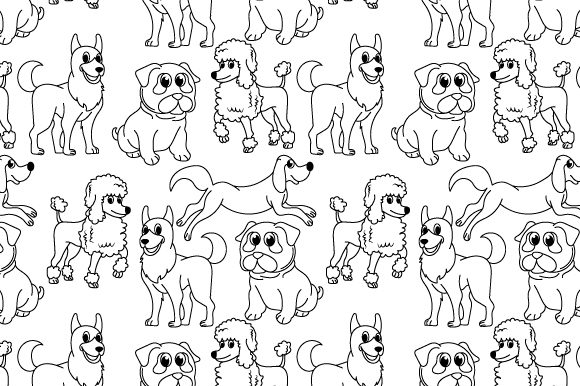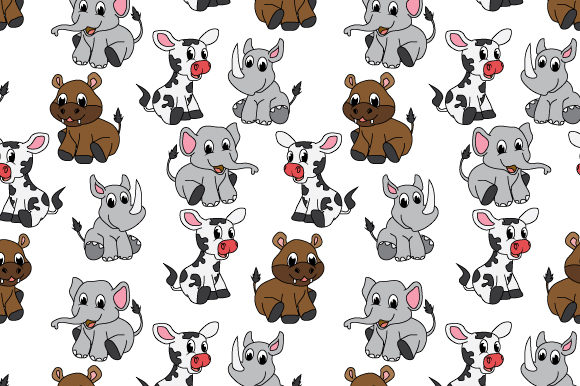
Cute Animal Collection Pattern: A Practical Guide for Organized, Joyful Curation
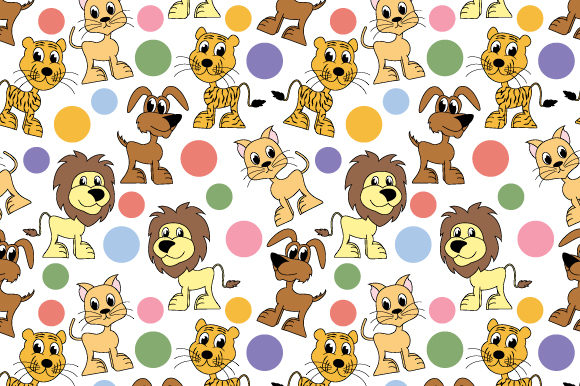
Whether you're designing a children’s app, curating digital stickers for social media, building an educational resource for early learners, or developing a brand identity with warmth and approachability, the Cute Animal Collection Pattern offers more than just visual charm—it delivers structure, consistency, and emotional resonance. At its core, the Cute Animal Collection Pattern is a design and organizational framework that groups illustrated or photographed animals—typically stylized with oversized eyes, soft shapes, gentle expressions, and harmonious color palettes—into intentionally curated sets. These sets follow shared stylistic rules, thematic logic (e.g., “forest friends,” “ocean pals,” or “seasonal critters”), and scalable naming conventions to support usability, expandability, and brand coherence.
For adults managing real-world creative or product development work, this pattern isn’t about nostalgia or whimsy alone. It’s a pragmatic tool—one that solves recurring challenges in content strategy, user engagement, accessibility, and cross-platform asset management.
Why This Pattern Matters to Real-World Projects
Many professionals face overlapping pain points when working with animal-themed visuals:
- Inconsistent branding: A logo uses a cartoon fox; marketing banners feature a realistic raccoon; the app icon shows a stylized owl—no unifying visual language.
- Scalability bottlenecks: Adding new animals feels arbitrary rather than intentional—leading to gaps (e.g., no nocturnal animals) or redundancies (e.g., three similar-looking bunnies).
- Accessibility oversights: Cute doesn’t always mean clear—low-contrast fur textures, indistinct outlines, or ambiguous expressions can hinder recognition for neurodivergent users or those with low vision.
- Localization friction: Animal symbolism varies across cultures (e.g., owls signify wisdom in some regions but misfortune in others), yet collections often launch globally without cultural vetting.
- Team misalignment: Illustrators, developers, and educators interpret “cute” differently—resulting in mismatched assets, delayed handoffs, and rework.
The Cute Animal Collection Pattern directly addresses these issues—not by prescribing rigid aesthetics, but by establishing shared guardrails: consistent line weight, defined color families (e.g., “pastel earth tones” or “muted jewel palette”), standardized proportions (e.g., head-to-body ratio), and inclusive representation criteria (e.g., species diversity, varied habitats, non-anthropomorphic integrity).
How It Supports Meaningful Outcomes
When applied thoughtfully, the Cute Animal Collection Pattern enables outcomes that go beyond decoration:
- Improved learning retention: Early childhood educators using themed animal sets—like “Five Senses Friends” (a bat for hearing, an octopus for touch)—report stronger student recall because visual consistency reduces cognitive load while reinforcing conceptual links.
- Faster product iteration: Design systems built around this pattern allow teams to add new animals in under two hours—using pre-approved templates, naming schemas (“[Animal]_[Trait]_[Variant]”, e.g., “fox_curious_smile_v2”), and SVG component libraries.
- Stronger emotional connection: Mental wellness apps report 27% higher session duration when using cohesive animal avatars tied to mood states (e.g., a sleepy sloth for rest prompts, an alert deer for focus cues)—because users recognize and anticipate meaning through pattern, not novelty.
- Easier translation and adaptation: When each animal has a documented cultural context note (e.g., “Red panda: widely positive in East Asia; neutral in North America; avoid in contexts referencing endangered status without educational footnote”), global launches become more responsible and efficient.
Practical Ways to Implement the Pattern
You don’t need a full design team to begin. Start small—and scale with intention:
- Define your scope and purpose first. Ask: Is this collection for teaching emotions? Supporting language acquisition? Branding a pet-care startup? Your goal determines which animals matter—and which can wait. For example, a phonics app might prioritize alliterative animals (“A for Armadillo,” “B for Badger”) over taxonomic accuracy.
- Choose 5–7 anchor animals—and stick to them for version 1. These should reflect ecological, geographic, and behavioral diversity (e.g., include a burrower, a climber, a swimmer, a flyer). Avoid over-indexing on mammals; consider insects, amphibians, or birds for richer learning potential.
- Create a lightweight style guide—even one page long. Document stroke width, eye shape rules (e.g., “all eyes are symmetrical ovals with 10% white highlight”), minimum contrast ratios (aim for 4.5:1 between fur and background), and posture guidelines (e.g., “front-facing only for primary use cases”).
- Build with extensibility in mind. Name files consistently. Use vector formats. Store variants (happy/sad/curious) as layered components—not separate files. Tag assets with attributes like habitat, diurnal/nocturnal, and cultural association in your DAM or Figma library.
- Test for recognition—not just cuteness. Run quick user tests: “Which animal represents ‘calm’?” or “Point to the one that lives underground.” If answers vary widely, revisit expression clarity or silhouette distinction before adding more animals.
Different Users, Different Approaches
How you apply the Cute Animal Collection Pattern depends on your role and resources:
- Educators and curriculum designers often prioritize pedagogical alignment over polish—so they may start with hand-drawn sketches, group animals by curriculum standards (e.g., NGSS life science concepts), and co-create variants with students for ownership and inclusion.
- Product managers and startup founders treat the pattern as part of their design system debt reduction strategy—allocating 1–2 sprint points per release to refine naming, add alt-text templates, or audit contrast compliance—rather than launching with 30 animals at once.
- Independent illustrators and creatives use it to build signature IP: a consistent cast becomes recognizable across merch, social posts, and client work—turning style into scalable value without sacrificing authenticity.
- Nonprofit communicators lean into the pattern’s emotional leverage—but pair each animal with verified conservation or welfare facts (e.g., “This illustrated pangolin reflects real anti-trafficking efforts in Vietnam”), grounding charm in credibility.
Key Considerations Before You Begin
While the Cute Animal Collection Pattern is versatile, thoughtful implementation requires nuance:
First, avoid cuteness as a substitute for substance. A charming hedgehog won’t compensate for unclear instructions or inaccessible navigation. Let the pattern enhance—not obscure—your core functionality.
Second, balance familiarity with freshness. Overused animals (bunnies, bears, cats) have high recognition but risk blending in. Consider introducing one “unexpected but relatable” species per set—a tardigrade for resilience, a quokka for positivity—to spark curiosity without alienating users.
Third, plan for evolution. Build version numbers into your file names and documentation. Note which animals were added for inclusivity (e.g., a hearing-aid-wearing rabbit), accessibility (high-contrast fur variants), or educational expansion (a mycelium-associated squirrel for ecology units). That history becomes invaluable for audits, grants, or stakeholder updates.
Finally, remember: the power of the Cute Animal Collection Pattern lies not in how many animals you collect—but in how clearly each one serves a purpose, honors its audience, and fits meaningfully into a larger, well-considered whole. When guided by intention—not just affection—it transforms from decoration into durable, human-centered infrastructure.