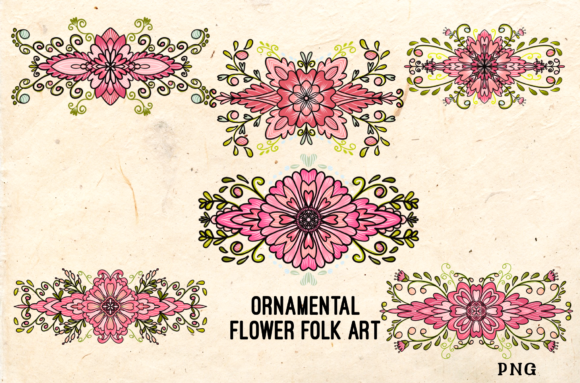
Ornamental Flower Folk Art: Timeless Charm with Intentional Craft
Ornamental Flower Folk Art isn’t just decorative—it’s a visual language rooted in regional tradition, hand-guided rhythm, and symbolic storytelling. Think hand-painted Swedish dalmålning, Ukrainian pysanky motifs adapted into borders, or Mexican alebrijes-inspired floral silhouettes—each carrying cultural weight, not just aesthetic appeal. People gravitate to it for authenticity: small business owners use it to differentiate handmade product labels; educators bring tactile history into art lessons; bloggers layer it thoughtfully into seasonal content; and freelancers choose it to add warmth without cliché. But its charm can quickly fade when used without context—or worse, misapplied through assumptions.
Assuming “Folk Art” Means “Generic Clipart”
Many start by searching “ornamental flower folk art free download” and land on low-resolution PNGs stripped of origin, scale notes, or usage guidance. That floral border might look lovely at thumbnail size—but zoom in, and you’ll see jagged edges, inconsistent line weights, or missing negative space that was essential to the original woodcut technique. When scaled for a 24" x 36" event banner, those flaws multiply. Worse, some downloads silently embed attribution requirements or prohibit commercial use—leading to takedown notices or rebranding costs down the line.
Better approach: Prioritize sources that credit region, era, and artisan tradition—even if simplified for modern use. Look for SVG or high-DPI vector files with layered components (e.g., stem, petal clusters, leaf variants) so you can adapt rather than stretch. A set from a documented heritage archive or a contemporary folk artist’s shop (like those verified on Etsy or Creative Market with clear licensing) gives you both flexibility and ethical grounding.
Overlooking Scale, Rhythm, and Negative Space
Folk art flowers rarely follow botanical precision—they rely on repetition, asymmetry, and breathing room. A common mistake is cramming five ornamental blooms into a narrow header bar, flattening their expressive spacing. Or using a dense Ukrainian vyshyvanka-style motif as a full-page background, drowning text and exhausting the eye.
Consider this real example: A café owner ordered custom coasters featuring a scanned 19th-century Polish paper-cut floral design. The vendor enlarged it uniformly—but the original relied on fine, delicate cuts meant to be viewed at 4–6 inches. At coaster size, the details blurred into muddy gray. The fix? Working with a designer to isolate key elements (a single stylized poppy + vine), simplify line depth, and reintroduce intentional gaps—preserving spirit over literal copy.
Before finalizing any layout: Print a physical mock-up at true size. Step back three feet. Ask: Does the eye rest anywhere? Can you trace one bloom’s shape without getting lost? If not, reduce density—or rotate a single motif to create implied rhythm instead of repeating identically.
Mixing Traditions Without Awareness
Combining Scandinavian rosemaling swirls with Indian madhubani floral fill patterns *can* work—but only when done with respect for each system’s logic. Rosemaling uses flowing, unbroken lines and limited palette shifts; madhubani relies on bold outlines and intricate internal patterning. Slapping them side-by-side often reads as visual noise, not fusion.
This isn’t about restriction—it’s about coherence. A textile designer once layered Czech kroj floral bands with West African adinkra symbols, assuming “all folk art is interchangeable.” The result lacked hierarchy and confused her audience. She revised by anchoring the composition in one tradition (Czech band as base), then using a single adinkra symbol—Sankofa, meaning “learn from the past”—as a subtle watermark in the corner. That small edit honored both roots while keeping communication clear.
Ask before blending: What function did this motif serve originally? Was it celebratory? Protective? Seasonal? Let intention—not just appearance—guide placement and pairing.
Skipping the “Why” Behind Color Choices
Red poppies in Polish folk art often symbolize remembrance; blue cornflowers in German traditions signify fidelity; yellow marigolds in Mexican contexts mark Día de Muertos transitions. These aren’t arbitrary palettes—they’re encoded meaning. Using a vibrant red-and-black Ukrainian floral pattern for a wellness brand’s yoga mats may unintentionally evoke mourning rather than vitality, depending on cultural familiarity of your audience.
That doesn’t mean you must avoid color—but it does mean checking context. If sourcing digitally, note whether the palette is historically accurate or artist-modernized. If commissioning custom work, discuss symbolism early. One small business selling herbal teas worked with a Lithuanian illustrator to adapt traditional šventinės (festive) flowers—swapping traditional black outlines for soft sage green to reflect plant-based values, while keeping the spiral vine structure intact. The shift felt fresh but still legible as folk-derived.
Underestimating Learning Curve—Especially for Hand Application
Painting ornamental flower folk art by hand (on ceramics, fabric, or signage) looks deceptively simple. In reality, it demands muscle memory for consistent stroke pressure, understanding of pigment bleed on porous surfaces, and patience with drying layers. Beginners often rush outlines, skip underpainting for dimension, or use brushes too stiff for fine tendrils—ending with stiff, lifeless results.
A better path? Start with one motif—say, a simplified Swedish daisy—and practice it 20 times on scrap paper using the exact brush and medium you’ll use on the final piece. Note where lines waver or taper unevenly. Adjust grip, speed, or dilution—not expectation. Many successful folk-art lettering artists begin with tracing historical examples, then gradually loosen control as confidence builds.
Final checklist before committing:
- Is the source transparent about origin, usage rights, and technical specs (DPI, file type, color mode)?
- Does the motif scale gracefully across your intended formats—from social thumbnail to wall print?
- Have you tested contrast, readability, and emotional resonance with a small, diverse group?
- If adapting by hand or digitally, have you allowed time for iteration—not just execution?
Ornamental Flower Folk Art earns its place when treated as living craft—not static decoration. It rewards attention to lineage, proportion, and purpose. Whether you’re selecting a digital asset, commissioning illustration, or picking up a brush, let curiosity guide you deeper than surface beauty. The most resonant results don’t shout “folk art”—they invite quiet recognition, like remembering a story you’ve heard before.